
Jednou z hlavných náplní Transparency International Slovensko je poskytovať odborné analýzy a hodnotenia. Tie vychádzajú z aktuálnych prieskumov, rebríčkov a tiež pravidelného monitoringu spoločenského vývoja na Slovensku.
- Hodnotenia vlády a parlamentu
- Hodnotenie samospráv
- Druhé hodnotenie transparentnosti VÚC
- CPI (Corruption Perceptions Index) – Index vnímania korupcie
- Barometer korupcie
- Eurobarometer
- Prieskumy TIS
- Vývoj korupcie na Slovensku
Hodnotenia vlády a parlamentu
Najlepším zákonom v boji proti korupcii počas vlády Ivety Radičovej sa stala novela zákona o sudcoch a prísediacich, ktorá zaviedla zverejňovanie rozhodnutí súdov na internete, verejné výberové konania na sudcov a podrobnejšie majetkové priznania pre sudcov. Vyplýva to z rebríčka Transparency International Slovensko na základe názoru trinástich pozvaných expertov, ktorí posudzovali dvadsať protikorupčných zákonov predložených do parlamentu v tomto volebnom období.
S tesným odstupom sa na druhom mieste sa umiestnilo povinné zverejňovanie zmlúv na internete, na treťom mieste skončila ďalšia novela o sudcoch a prísediacich, ktorá zavádza pravidelné päťročné hodnotenie činnosti sudcov a zverejňovanie výkazov o práci sudcov na internete. Všetky tri opatrenia pochádzajú z dielne Ministerstva spravodlivosti (rebríček prospešnosti zákonov v prílohe č.1).
Poslanci

Za protikorupčné opatrenia najaktívnejšie hlasoval poslanec Miroslav Beblavý (SDKÚ-DS). Za ním nasledujú poslanci Kamil Krnáč (SaS), Jana Žitňanská (KDH). Všetci traja sú poslanci, ktorí sa odlišujú od svojich straníckych kolegov aj vlastnou legislatívnou iniciatívou. Beblavý s Krnáčom predložili novelu verejného obstarávania zavádzajúcu elektronické aukcie, Beblavý a Žitňanská vysokoškolskú novelu o povinnom zverejňovaní kvalifikačných (diplomových) prác. Všetci traja spoločne navrhli zmeny v procese prideľovania eurofondov, ktorá okrem iného špecifikuje osoby, ktoré nesmú o dotáciách pre konflikt záujmov rozhodovať ako aj množstvo povinne zverejňovaných informácií ako sú členovia hodnotiacich komisií. Beblavý sám navrhol povinnosť predávať majetok štátu v hodnote nad 10 tisíc eur v elektronických aukciách.
Najhoršie hlasujúcimi poslancom sa stali Peter Žiga (Smer-SD) a Igor Štefanov (SNS). Z pozitívnych opatrení hlasoval Žiga iba za zrušenie priestupkovej imunity a zavedenie tabulí hanby. Igor Štefanov získal pozitívne body len za hlasovanie v prospech novely o prokuratúre z dielne Smeru. Oproti Žigovi mu skóre zlepšujú absencie na hlasovaniach.
Politické strany

Najaktívnejšie za protikorupčné opatrenia hlasoval poslanecký klub KDH, následne poslanecký klub SDKÚ-DS a Mostu-Híd. Prvé miesto KDH je možné vysvetliť dobrou dochádzkou na hlasovania a vysokým počtom aktívnych poslancov pri relatívne malom počte poslancov (aktívnymi boli najmä Žitňanská, Procházka, Hrušovský a Sabolová). Posledné miesto SaS v rámci koalície je dôsledkom hlasovania proti novele stavebného poriadku a do menšej miery aj proti spotrebiteľským „tabuliam hanby“.
Naopak protikorupčnú agendu najviac torpédoval poslanecký klub Smer-SD. Žiadny poslanec opozície neskončil s pozitívnym skóre, čo znamená, že všetci poslanci Smeru-SD aj SNS hlasovali väčšinou proti opatreniam, ktoré odborníci hodnotili pozitívne, vrátane povinného zverejňovania zmlúv či elektronických aukcií. Rozdiely medzi straníkmi Smeru a SNS takmer výlučne tvoria absencie pri hlasovaniach, nie ich odlišný postoj k navrhovaným protikorupčných zákonom.
Hodnotiteľmi zákonov bolo 13 expertov na protikorupčnú oblasť: Gabriel Šípoš (riaditeľ Transparency), advokáti Tomáš Kamenec, Pavel Nechala (Transparency) a Vladimír Pirošík (Transaprency), politológ Ivan Rončák (Transaprency), profesor Juraj Nemec (Univerzita Mateja Bela), riaditeľ SGI Ctibor Košťál, Vladimír Špánik (predseda Združenia občanov miest a obcí Slovenska), Richard Drutarovský, analytik, mediátor a poslanec mestského zastupiteľstva v Prešove, Dušan Zachar (analytik INEKO), Ľuba Vávrová (Centrum rozvoja samospráv) Ľubomír Plai (expert na štátnu správu) a Jíří Vlach (Transparency).
Detailný popis metodiky sa nachádza v prílohe číslo 3 v tlačovej správe.
Súbor s pokladovými tabuľkami je dostupný na adrese http://bit.ly/Hodnotenie2012 (xls)
##
Emília Sičáková-Beblavá z TIS sa prípravy ani hodnotenia práce parlamentu a vlády nezúčastnila. Hodnotenie práce vlády a parlamentu robí TIS v rámci projektu vyvodzovania zodpovednosti voči politikom, ktorý bol podporený nadáciou Open Society Institute.
##
Pozri aj:
- Vláda I. Radičovej úspešne reštartovala boj proti korupcii
- Hodnotenie zákonov 2006 – 2010
- Publikácia Protikorupčné minimum 2010
- Najlepšie protikorupčné programy majú SaS a SDKÚ-DS
- Inštitút Rady Európy kritizuje slovenskú vládu za nečinnosť v boji proti korupcii
- Vláda R. Fica v boji proti korupcii zlyhala
- Návrhy zákonov v oblasti boja proti korupcii, o ktorých parlament hlasoval (2006 – 2010)
- Rebríček poslancov a strán podľa hlasovania v NR SR o protikorupčných zákonoch (2006 – 2010)
- Prieskum: Fico aj Dzurinda bojovali s korupciou rovnako slabo
- Hodnotenie troch rokov činnosti vlády SR a Národnej rady SR v oblasti boja proti korupci
- Hodnotenie dvoch rokov činnosti vlády SR a Národnej rady SR v oblasti boja proti korupci (jún 2008)
- NAŠE ODPORÚČANIA
- Komparácia úspešnosti vládnych protikorupčných programov „Čisté ruky“ a „Národný program boja proti korupcii“ v praxiBakalárska práca, Veronika Tencerová Bratislava 2008
- Konferencia “Protikorupčné nástroje – prevencia a represia”
- Protikorupčné odporúčania na aktualizáciu Národného programu boja s korupciou
- Protikorupčná politika na najbližšie 4 roky – seminár
- Protikorupčné minimum 2006
- Protikorupčné minimum 2002
- ostatné aktivity
Hodnotenie transparentnosti miest
 TIS v októbri 2014 zverejnila rebríček Otvorená samospráva 2014: hodnotenie 100 najväčších samospráv na Slovensku. Najtransparentnejším mestom na Slovensku je Martin, ktorý sa posunul na vrchol rebríčka z druhého miesta z roku 2012. Na druhom mieste skončila Prievidza, tretie miesto obhájila Rožňava. Po výraznejšom zlepšení v rokoch 2010-12 mestá za uplynulé dva roky v transparentnosti v priemere stagnovali. Vyplýva to z hodnotenia sto najväčších slovenských miest Otvorená samospráva 2014 od Transparency International Slovensko.
Najväčšie slovenské mestá dosiahli v priemere len 47 bodov zo sto možných. Aj nízka transparentnosť môže byť dôvodom, že občania sú k práci miest dlhodobo kritickí. Podľa nedávneho prieskumu agentúry FOCUS chce každý druhý občan svojho starostu vymeniť. Vyššia transparentnosť pritom znižuje riziká neefektívneho míňania verejných prostriedkov a zmenšuje priestor pre korupciu. Rebríček je založený na hodnotení poskytovania informácií obcami na ich weboch a cez infožiadosti, ako aj rozsahu nimi zavedených protikorupčných mechanizmov. Všetky informácie vrátane úplných rebríčkov sú dostupné na webstránke projektu.
| MESTO | Skóre v 2014 | Poradie v 2014 | Známka v 2014 |
| Martin |
72 |
1 |
A- |
| Prievidza |
71 |
2 |
A- |
| Rožňava |
70 |
3 |
B+ |
| Bratislava |
69 |
4 |
B+ |
| Banská Bystrica |
69 |
5 |
B+ |
| Bratislava – Petržalka |
67 |
6 |
B+ |
| Vranov nad Topľou |
66 |
7 |
B+ |
| Sala |
65 |
8 |
B |
| Smižany |
62 |
9 |
B |
| Michalovce |
61 |
10 |
B |
Druhé hodnotenie transparentnosti VÚC
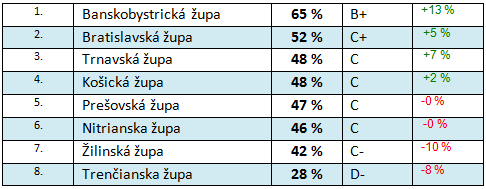
Z druhého hodnotenia žúp v rebríčku Otvorená samospráva od Transparency International Slovensko z roku 2013 vyplýva, že transparentnosť slovenských vyšších územných celkov stále zaostáva za úrovňou najväčších slovenských miest. Rebríček transparentnosti hodnotil župy v 11 oblastiach (napr: poskytovanie informácií o práci úradu a poslancov, personálna politika, prenájmy majetku, udeľovanie grantov a dotácií, atď.) na základe 125 ukazovateľov (napr: forma zverejňovania zmlúv a faktúr, používanie elektronických aukcií, atď.)
Župy dosiahli v hodnotení v priemere len 47 percent, a najlepší kraj len 65 percent. Pritom najlepšie zo 100 najväčších slovenských miest v podobnom rebríčku v minulom roku dosiahli až 83 percent. Banskobystrický samosprávny kraj (BBSK) bol aj v roku 2013 podľa rebríčka najtransparentnejšou župou, nasledovaný bratislavskou a trnavskou župou. Najhorším je opäť Trenčiansky samosprávny kraj, ktorý dosiahol len tretinu možných bodov.
Viac informácií o výsledkoch a použitej metodológii je zverejnených na webstránke projektu.
CPI (Corruption Perceptions Index) – Index vnímania korupcie
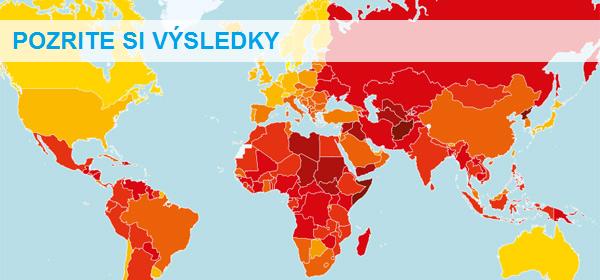
Podľa najnovšieho vydania svetového rebríčka vnímania korupcie Transparency International (CPI 2013) skončilo Slovensko na 61.mieste zo 177 hodnotených krajín. Podobne ako pred rokom je to piate najhoršie umiestnenie z krajín Európskej únie, keď horšie skončili len Taliansko, Rumunsko, Bulharsko a Grécko. Viac informácií nájdete v tlačovej správe alebo priamo na stránke Transparency International venovanej CPI 2013.
Index vnímania korupcie je najznámejší, najväčší a najcitovanejší index venujúci sa korupcii vo verejnom sektore. Nie je to jeden prieskum, ale prieskum prieskumov. Každý rok sa zoberie do úvahy niekoľko najnovších medzinárodných prieskumov, v ktorých sa vyskytli otázky o stave korupcie či úplatkárstva. Ani jeden z týchto prieskumov nezadáva samotná Transparency International ani jej pobočky, ale robia ju rôzne inštitúcie.
Index vnímania korupcie (Corruption Perceptions Index, CPI) je počítaný centrálou Transparency International v Berlíne. V prípade Slovenska index zahŕňa údaje z prieskumov od siedmich inštitúcií (Svetové ekonomické fórum WEF, Freedom House, The Economist Intelligence Unit, Inštitút pre rozvoj manažmentu IMD, Bertelsmannova nadácia a analytické agentúry IHS Global Insight a Political Risk Services) uskutočnených v priebehu roku 2012 a úvodu roka 2013. Experti Bertelsmannovej nadácie pritom ako jediní hodnotili vývoj od roku 2011. Prieskumy boli robené medzi domácimi i zahraničnými manažérmi a analytikmi. Týkali sa len korupcie vo verejnom sektore.
Kvôli zásadným zmenám v konštrukcii indexu nie sú výsledky porovnateľné s doterajšími výsledkami indexu z pred roka 2011. Uskutočnené zmeny však umožnia ľahšie a objektívnejšie porovnávanie vývoja krajín medzi rokmi v budúcnosti.
Rebríček vnímania korupcie Transparency International je najcitovanejším indexom transparentnosti na svete. Veľmi často je používaný globálnymi firmami pri zvažovaní ich nových investícií, ale aj pri formovaní zahraničných vzťahov medzi krajinami. Samotný národný program reforiem schválený za vlády Ivety Radičovej a prevzatý vládou súčasnou používa tento rebríček ako jeden z dvoch ukazovateľov úspešnosti boja vlády proti korupcii.
Centrála Transparency v Berlíne zhromažďuje výsledky prieskumov, spriemeruje ich a výsledky posiela na jeseň pobočkám pár dní pred celosvetovým publikovaním. Obsadenie lokálnych pobočiek Transparency vrátane slovenskej, má teda nulový vplyv na skóre spomínaného indexu. Je len na jednotlivých pobočkách aké vysvetlenie skóre poskytne a ako okomentuje dianie vo svojej krajine.
Pozri aj:
- CPI – Corruption Perceptions Index (English)
- Fico a Kaliňák divákov zavádzali o indexe korupcie od Transparency
- Aj Počiatek rád zavádza o indexe Transparency
Barometer korupcie 2013
Globálny barometer korupcie organizovaný Transparency International je jediný celosvetový prieskum názorov a skúseností verejnosti s korupciou. V roku 2013 sa uskutočnil ôsmy ročník Globálneho barometra korupcie, ktorý zahŕňa odpovede viac než 114 tisíc ľudí zo 107 krajín a je najväčším z doposiaľ uverejnených prieskumov s takýmto zameraním. Na Slovensku sa tento prieskum uskutočnil po druhý krát (prvýkrát to bolo v roku 2010) a vykonala ho agentúra Mareco.
Svetové zistenia ukazujú, že korupcia je celosvetovo rozšíreným fenoménom, keď viac než štvrtina respondentov uviedla, že zaplatila nejaký úplatok počas posledných dvanástich mesiacov. Obzvlášť závažným zistením je, že za skorumpované ľudia považujú inštitúcie ležiace v samotných základoch demokratického zriadenia, či už politické strany, parlamenty, súdy, či políciu, čo následne môže oslabovať ich legitimitu a viesť ku kríze demokratických režimov. Je však potrebné uviesť, že agregátne výsledky sú do značnej miery ovplyvnené aj vzorkou krajín zahrnutých prieskume, pričom mnohé z nich (napr. Rusko, Ukrajina, Zimbabwe,..) možno len ťažko nazvať demokratickými.
Politické strany považujú ľudia za najskorumpovanejšie v 51 (!!!) krajinách sveta, súdnictvo v 20 (medzi nimi aj na Slovensku) a políciu v 36. [1] Na druhej strane, pozitívom je, že ľudia sami seba vnímajú ako súčasť potenciálneho riešenia korupcie, keď dve tretiny opýtaných súhlasia s názorom, že obyčajní ľudia môžu svojim dielom prispieť k zníženiu korupcie (na Slovensku to bolo 66% respondentov, globálny priemer je 67%).
(Obrázok: % ľudí verí, že môžu prispieť k boju proti korupcii)

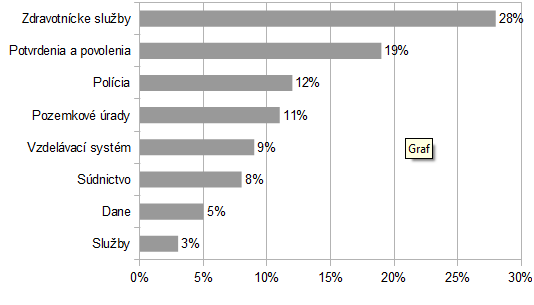
Zo slovenských zistení je najalarmujúcejším, že každý piaty Slovák za posledných 12 mesiacov dal aspoň raz niekde úplatok v akejkoľvek forme. Najčastejšie sa tento jav vyskytoval pri stretnutí so zdravotníctvom, kde tak učinilo až 28% z tých, ktorí mali za posledný rok so zdravotníctvom nejakú skúsenosť.
Až 56% opýtaných si myslí, že korupcia sa na Slovensku za posledné dva roky zvýšila a až 63% považuje vládne protikorupčné aktivity za neefektívne. Pozoruhodným je tiež fakt, že tri pätiny respondentov majú pocit, že vláda slúži najmä záujmom pár veľkých hráčov, ktorí sledujú svoje ciele.
(Graf: Kde platili Slováci úplatky najčastejšie)
Pozri aj:
- Každá piata domácnosť zaplatí ročne aspoň jeden úplatok
- Korupcia na Slovensku: dôsledok kultúry?
- Za najskorumpovanejšie považujú Slováci súdy
- Čo je Globálny barometer korupcie?
- Oficiálne stránky prieskumu
- Globálny barometer korupcie 2010
- GCB2013_Slovakia – Úplné výsledky slovenskej časti prieskumu [anglicky]
Eurobarometer
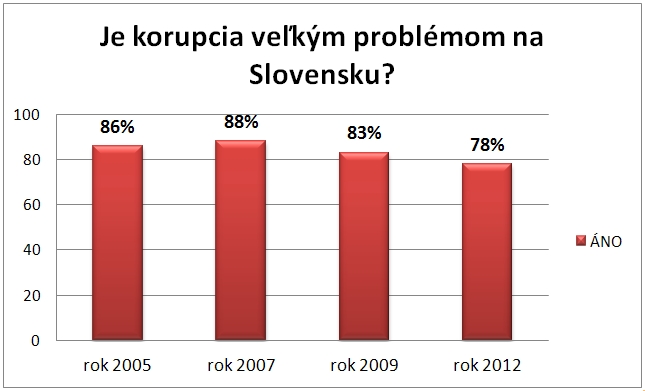
Eurobarometer je séria prieskumov verejnej mienky, ktoré sú zadávané Európskou komisiou. TIS sa zaujíma predovšetkým o eurobarometer zameraný na tému korupcie a názorov Európanov na ňu. Od vstupu Slovenska do EÚ sa uskutočnili 4 barometre venujúce sa korupcii 2005, 2007, 2009 a špeciálny Eurobarometer z roku 2012. Metodika zbierania a zdroje dát eurobarometra sú iné ako pri Indexe vnímania korupcie (pozri vyššie). Eurobarometer vychádza z údajov reprezentatívnej vzorky širokej verejnosti. Je preto viac pravdepodobné, že výsledky Eurobarometra zohľadňujú predovšetkým malú korupciu (napr. úplatky u občanov). Index vnímania korupcie (CPI) naopak vníma viac veľkú korupciu (napr. tendre). Aktuálny Index a Eurobarometer si napriek rozdielnym výsledkom navzájom neodporujú, keďže zohľadňujú iné formy korupcie a dáta pochádzajú od iných zdrojov a respondentov.
Pozri aj:
- Special Eurobarometer 374: Corruption, Feb. 2012 (English)
- Eurobarometer: Attitudes of Europeans towards Corruption Full report, Nov. 2009 (English)
- Eurobarometer: Attitudes of Europeans towards Corruption Full report, April 2008 (English)
- Eurobarometer: Opinions on organised, cross-border crime and corruption, March 2006 (English)
- Pocity, zážitky, a lži: Ako merať korupciu?
- Trpká oslava poklesu úplatkov v zdravotníctve
Prieskumy TIS
Transparency International Slovensko si dáva pravidelne vypracovať prieskumy verejnej mienky, vďaka ktorým sleduje spoločenské vnímanie korupcie na Slovensku. Prieskumy TIS sa podobne ako prieskumy Eurobarometru zadávajú externým poskytovateľom, ktorí následne vykonávajú prieskumy na reprezentatívnej vzorke (zvyčajne niečo viac než 1000 respondentov).
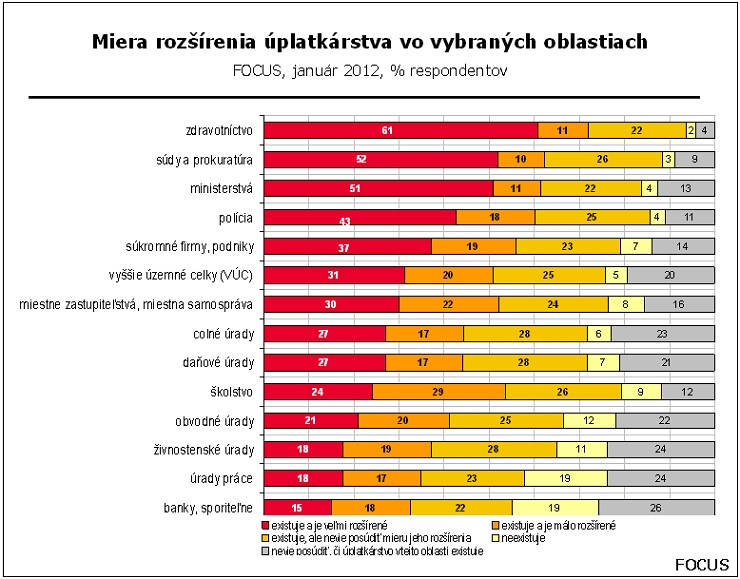
V januári 2012 vyšiel zatiaľ posledný prieskum TIS: Percepcia korupcie na Slovensku. Ten napríklad ukázal, že oproti roku 2009 sa zvýšila miera vnímania korupcie na súdoch a prokuratúrach, čím sa v rebríčku dostali pred ministerstvá. Z prieskumu tiež vyplýva, že vláda Roberta Fica dostala totožné hodnotenie, akým občania oznámkovali aj vládu Ivety Radičovej v boji s korupciou.
Vývoj korupcie na Slovensku
Indikátorom stavu korupcie na Slovensku je počet osôb stíhaných či odsúdených za dané trestné činy. Vývoj na základe uvedených ukazovateľov možno vidieť v tabuľke nižšie. Uvedené dáta naznačujú, že kým v rokoch 2005 – 2009 sa počet zistených prípadov stabilizoval na úrovni približne 250 prípadov za rok, tak od roku 2010 pozorujeme pokles v zistených aj objasnených trestných činoch. Dáta nesignalizujú žiadnu závažnejšiu zmenu v počte odsúdených v posledných rokoch.
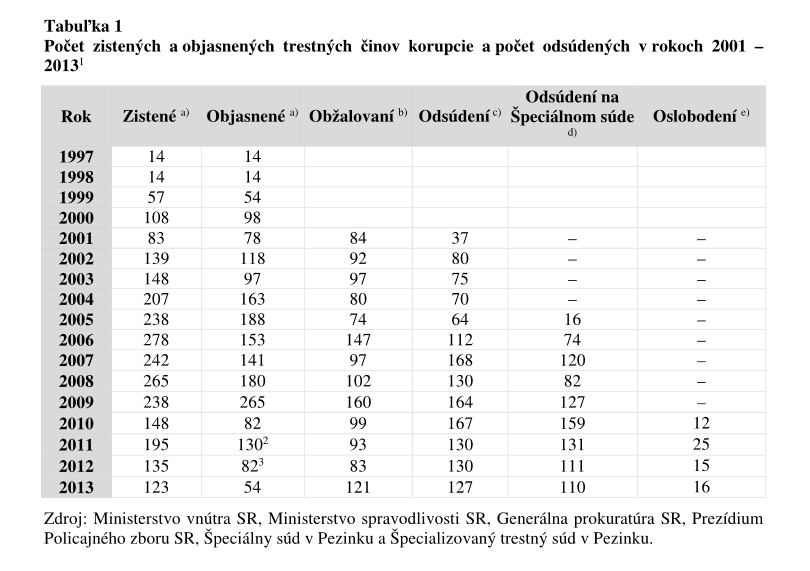
1 a) Informácie získané z Ministerstva vnútra SR, rok 2007, 2008 – Prezídium Policajného zboru SR; b) Informácie získané z Generálnej prokuratúry SR; c) Informácie získané z Generálnej prokuratúry SR; d) Informácie získané zo Špeciálneho súdu v Pezinku.
2 Navyše, šesťdesiatpäť osôb sa dohodlo o vine a treste.
3 Navyše, osemdesiatpäť osôb sa dohodlo o vine a treste.
Pozri aj:
- PRIESKUMY a REBRÍČKY
- Kompletné znenie posledného prieskumu TIS (január 2012)
- Kompletné znenie prieskumu TIS (november 2009)
